Mortgage Discount Points: Should You Buy Down Your Rate?
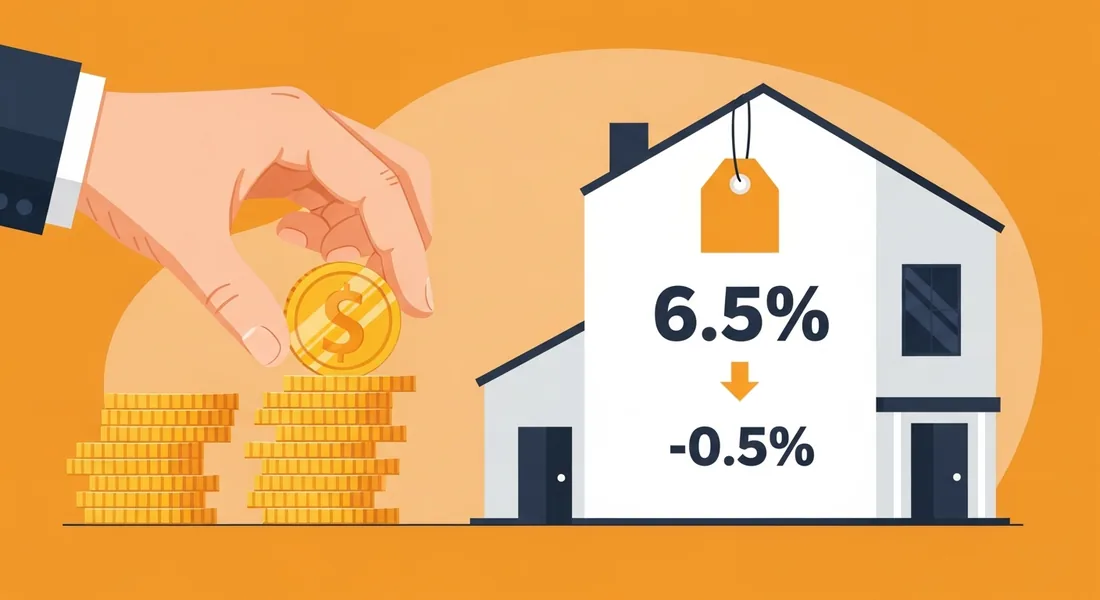
Table of Contents
- What Are Mortgage Discount Points?
- How Much Does One Point Lower Your Rate?
- A Real Example on a $350,000 Loan
- The Break-Even Calculation
- When Buying Points Makes Sense
- When You Should Skip the Points
- Lender Credits: Points in Reverse
- Are Discount Points Tax Deductible?
- Your Discount Points Decision Checklist
What Are Mortgage Discount Points?
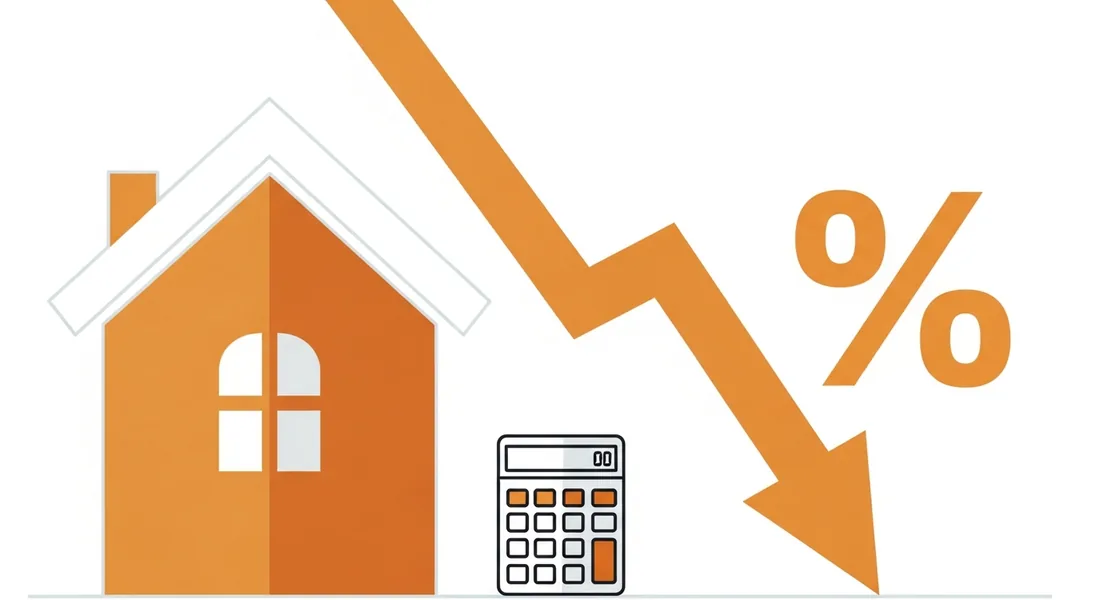
When you shop for a mortgage, the rate the lender quotes isn't always fixed — you can often pay extra money upfront to buy a lower interest rate. That upfront money is called discount points (sometimes just "points" or "buying down the rate"). It's essentially prepaid interest: you hand the lender cash at closing, and in exchange they shave your rate for the entire life of the loan.
The math starts simple. One discount point equals 1% of your loan amount. On a $350,000 loan, one point costs $3,500. Two points cost $7,000. You can usually buy points in fractions too — half a point on that same loan would be $1,750.
Think of it like paying for a gym membership a year in advance to lock in a discounted monthly rate. You spend more today, but every month afterward is cheaper. The only question that matters is whether you stick around long enough for those cheaper months to add up to more than you paid upfront. That's the entire decision in a nutshell, and the rest of this guide shows you exactly how to run the numbers.
How Much Does One Point Lower Your Rate?
Here's where the "typically" and "roughly" caveats matter. As a rule of thumb, one discount point buys down your rate by about 0.25% — so paying one point might take you from 6.75% to 6.50%. But this is not a law of nature. The exact reduction varies by lender, loan type, your credit profile, and current market conditions.
Depending on the day and the lender, a single point might buy anywhere from a 0.125% to a 0.375% reduction. That's why you should never assume — always ask the lender to show you the specific rate at 0 points, 1 point, and 2 points so you can compare apples to apples.
What a Typical 2026 Rate Sheet Looks Like
Assume a 30-year fixed loan and a lender quoting a base rate of 6.75%. A representative buydown menu might look like this:
- 0 points: 6.75% (no upfront cost)
- 1 point ($3,500): 6.50%
- 2 points ($7,000): 6.25%
- 3 points ($10,500): 6.00%
Notice that each point costs the same $3,500 but buys roughly the same 0.25% reduction. You can check where market rates sit before you shop by reviewing Freddie Mac's weekly Primary Mortgage Market Survey. Once you have your quotes, run each scenario through a calculator — this is exactly the kind of side-by-side comparison the Mortgage Pal app is built for.
A Real Example on a $350,000 Loan
Numbers make this concrete. Let's take a buyer with a $350,000, 30-year fixed loan, comparing the no-points option against buying two points to drop from 6.75% to 6.25%.
Scenario A: No Points
- Rate: 6.75%
- Monthly principal & interest: $2,270
- Total interest over 30 years: $467,234
- Upfront cost: $0
Scenario B: Buy Two Points ($7,000)
- Rate: 6.25%
- Monthly principal & interest: $2,155
- Total interest over 30 years: $425,804
- Upfront cost: $7,000 at closing
Buying the two points lowers your monthly payment by about $115 — from $2,270 down to $2,155. Over the full 30 years, that lower rate saves you roughly $41,400 in total interest. Subtract the $7,000 you paid upfront, and you're still ahead by about $34,400… but only if you keep the loan the entire 30 years.
That last condition is everything. Almost nobody keeps the same mortgage for three decades — people sell, refinance, or pay off early. So the real test isn't the 30-year total. It's how quickly your monthly savings repay the upfront cost. That's the break-even calculation, and it's the single most important number in this entire decision. For a refresher on how the underlying payment is built, see our mortgage payment formula guide.
The Break-Even Calculation
The break-even point tells you how many months it takes for your monthly savings to recoup what you paid for the points. Past that point, every payment is money in your pocket. Before that point, you'd have been better off keeping the cash.
The formula is refreshingly simple:
Break-even months = Cost of points ÷ Monthly savings
Running the Numbers
Using our two-point example on the $350,000 loan:
- Cost of points: $7,000
- Monthly savings: $115
- Break-even: $7,000 ÷ $115 = ~61 months (about 5 years)
So if you keep this mortgage longer than about five years, the points pay for themselves and then keep saving you money. If you sell or refinance before five years, you lose money on the deal — you paid $7,000 and never recovered it.
The math works out similarly for a single point. One point ($3,500) taking you from 6.75% to 6.50% saves about $58 per month, giving a break-even of $3,500 ÷ $58 ≈ 60 months. Notice the pattern: for a typical buydown, break-even tends to land in the five-year range regardless of how many points you buy, because the cost and the savings scale together.
A quick sanity check: if a lender's buydown offers a break-even much shorter than five years, it's an unusually good deal worth grabbing. If it stretches well past seven or eight years, be skeptical. The CFPB's home-buying resources recommend comparing the total cost of each option on your official Loan Estimate rather than fixating on the rate alone.
When Buying Points Makes Sense
Discount points are a bet that you'll stay in the loan long enough to cash in. That bet pays off in specific situations:
- You're staying in the home for the long haul. If you plan to keep the house and the mortgage well past the break-even point — say 7, 10, or more years — points can save you real money. Our two-point buyer who stays 10 years pockets roughly $6,800 in net savings; by year 15 it's over $13,000.
- You have cash to spare beyond your down payment and reserves. Points should come from extra funds, not from money you need for the down payment, closing costs, moving expenses, or your emergency fund.
- Rates are relatively high and you want to lock in relief. When rates sit in the mid-6% range, buying down to the low 6% range can meaningfully lower your payment for the life of the loan.
- You're on a fixed budget and value a lower guaranteed payment. The buydown permanently reduces your monthly obligation, which can matter for cash-flow stability or debt-to-income qualification.
- You don't expect to refinance soon. If today's rate is already near the bottom of your expectations, there's little reason to refinance later — so the points have time to work.
In short: long hold + spare cash + no near-term refinance = points are worth a serious look. Before committing, make sure the monthly payment still fits comfortably within your budget and that the buydown doesn't stretch your cash reserves too thin.
When You Should Skip the Points
Just as often, buying points is the wrong move. Skip them if any of these describe you:
- You'll likely move within a few years. A short hold is the number-one reason points backfire. If you sell in year three of a five-year break-even, you simply gave the lender $7,000 for nothing.
- You expect to refinance. If rates are elevated and forecast to fall, refinancing later erases the benefit of points you bought today. Buying down a rate you plan to replace is throwing money away. If refinancing is on your radar, read our refinance calculator guide first.
- You're tight on cash-to-close. That $3,500 or $7,000 almost always does more good as extra down payment (which can lower or eliminate PMI — see our PMI guide), as closing-cost coverage, or simply as a fuller emergency fund. Cash reserves protect you; prepaid interest does not.
- You could put the money toward principal instead. Applying a lump sum to principal or making extra monthly payments can rival the benefit of points while keeping your money flexible and building equity faster.
- The break-even is longer than your realistic time horizon. If honest math says break-even is 6 years and you're not confident you'll stay that long, don't do it.
The theme here is flexibility and liquidity. Points lock cash into the loan permanently. If there's a reasonable chance you'll want that money back — through a move, a refinance, or an emergency — keep it liquid.
Lender Credits: Points in Reverse
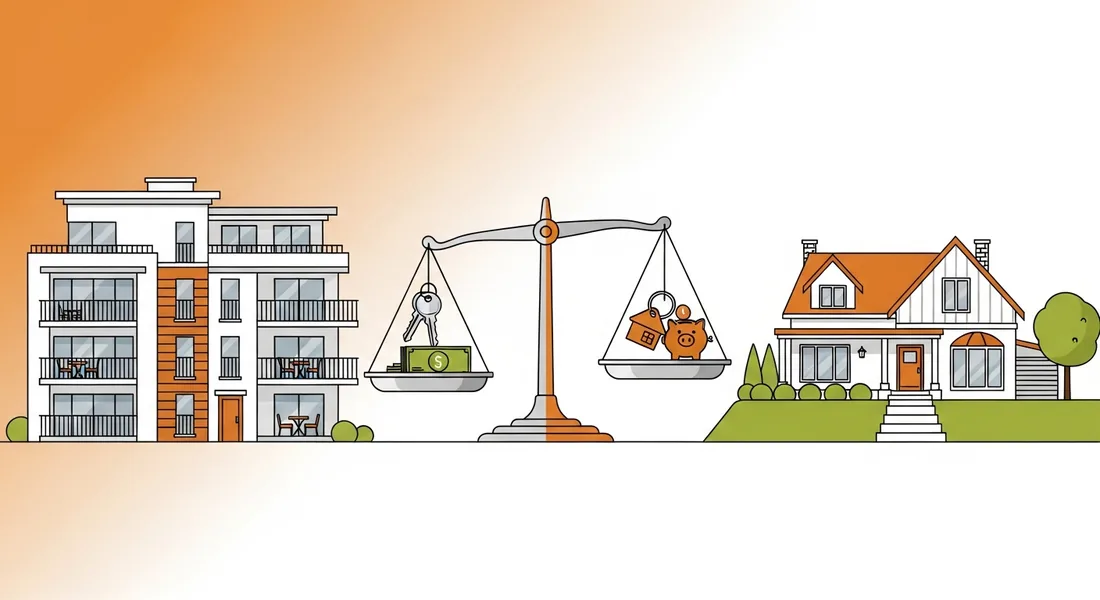
Discount points have a mirror image called lender credits, sometimes nicknamed "negative points." Instead of paying money to lower your rate, you accept a slightly higher rate in exchange for the lender giving you money at closing — cash that offsets your closing costs.
It's the exact opposite trade-off. With discount points you pay more now to pay less monthly. With lender credits you pay less now (lower closing costs) but more monthly, because of the higher rate.
A Quick Lender-Credit Example
On our $350,000 loan, suppose you accept 7.00% instead of 6.75% and the lender gives you a $3,500 credit toward closing costs. Your monthly payment rises by roughly $58. So you're saving $3,500 today but paying an extra $58 every month — break-even is again about five years, just running in the other direction.
Lender credits make sense when the opposite conditions apply:
- You're short on cash-to-close and need help covering closing costs now.
- You expect to move or refinance soon, so the higher monthly rate won't have long to add up.
- You'd rather keep your savings liquid than sink them into a rate buydown.
The takeaway: discount points and lender credits are two ends of the same lever. Which direction you pull depends entirely on how long you'll keep the loan and how much cash you have on hand today.
Are Discount Points Tax Deductible?
Here's a genuine upside that's easy to overlook: because discount points are a form of prepaid mortgage interest, they can be tax deductible if you itemize. This can soften the real cost of buying them.
According to IRS guidance (see Topic No. 504 and Publication 936 on Home Mortgage Interest), points paid on a loan to buy or build your main home may generally be deducted in full in the year you pay them, provided you meet several conditions, including:
- The loan is secured by your main home.
- Paying points is an established, customary practice in your area.
- The points are within the usual range for your area and were not paid in place of other clearly itemized closing costs (like appraisal or title fees).
- You paid the points using your own funds rather than borrowing them from the lender.
The rules differ for points on a refinance or on a second home — in those cases you typically must deduct the points gradually over the life of the loan rather than all at once. There are also exceptions and record-keeping requirements the IRS spells out in detail.
This article is educational and not tax advice. Tax situations vary widely, and whether the deduction actually benefits you depends on whether you itemize versus take the standard deduction. Always consult a qualified tax professional before counting on any deduction to justify buying points.
Your Discount Points Decision Checklist
Discount points aren't inherently good or bad — they're a tool that fits some situations and hurts others. The right choice comes down to your time horizon, your cash position, and the specific numbers on your Loan Estimate. Run through this checklist before you decide:
- Ask each lender for the rate at 0, 1, and 2 points so you can compare exact costs and savings.
- Calculate your break-even: cost of points ÷ monthly savings = months to break even.
- Honestly estimate how long you'll keep this loan — will you pass the break-even point?
- Confirm the points come from spare cash, not from your down payment, reserves, or emergency fund.
- Ask whether that same money would do more as extra down payment (to cut PMI) or extra principal.
- Consider whether you're likely to refinance — if so, points you buy today may never pay off.
- Weigh lender credits as the reverse option if you're short on cash-to-close.
- Ask a tax professional whether the points would be deductible in your situation.
Once you have real quotes in hand, the smartest next step is to model each option side by side. Plug your loan amount, the rate at each point level, and the upfront cost into Mortgage Pal, and you'll see the monthly payment, total interest, and break-even for every scenario at a glance — no spreadsheet required. Comparing the numbers directly turns an abstract "should I buy points?" question into a clear dollars-and-cents answer.
Whether you ultimately buy points, take a lender credit, or stick with the base rate, the goal is the same: pay the least amount of money for the home you want over the time you'll actually own it. For the bigger picture on running these calculations, start with our complete mortgage calculator guide and let the numbers lead the way.
Trusted by thousands of homeowners, realtors, and mortgage professionals.
Mortgage Pal is the #1 rated mortgage calculator app on the App Store. It's 100% free to use. Download today and try for yourself.

⭐ 4.8/5.0 • 3,300+ Reviews • 100% Free